Shopping for children’s clothing online gives parents access to more designs, sizes and brands than they may find locally. It can also create one major concern: What size should I order?
Age labels appear simple, but children do not all grow at the same rate. One six-year-old may be taller than another eight-year-old. Some children need additional room at the waist, while others need longer sleeves or pants.
The most reliable approach is to combine your child’s measurements with the specific garment’s size chart and intended fit.
Why Age-Based Sizing Is Only a Starting Point
Labels such as 4T, 5–6 years or 8–9 years are useful as a general reference. They are not universal measurements.
Brands develop their size charts based on their own patterns, target customers and garment styles. A size 6 from one brand may be similar to a size 7 from another. Imported clothing can also follow different regional sizing conventions.
Age is therefore best treated as the beginning of the decision—not the final answer.
Before ordering, consider:
- Your child’s current height
- Chest measurement
- Waist measurement
- Hip measurement when relevant
- Shoulder width
- Sleeve or garment length
- The child’s usual fit preferences
- The intended style of the item
A relaxed tunic and a fitted dress should not be expected to have the same width, even when both carry the same size label.
What You Need to Measure Your Child
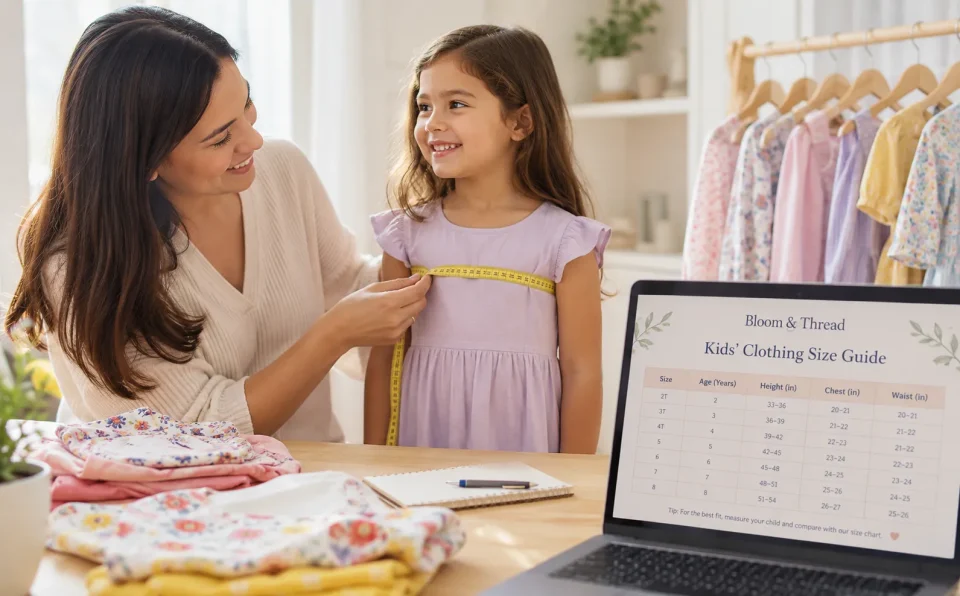
Use a soft measuring tape. The child should wear lightweight clothing and stand naturally. Pulling the tape too tightly may produce an inaccurate size.
Record the measurements rather than relying on memory. Children grow, and measurements taken several months ago may no longer be useful.
Height
Ask your child to stand without shoes against a wall. Keep the head level and mark the top of the head. Measure from the floor to the mark.
Height is especially important for dresses, long tops, pants and coordinated sets.
Chest
Wrap the tape around the fullest part of the chest, keeping it level across the back. The tape should touch the body without squeezing.
Chest measurements are useful for shirts, dresses, jackets, kurtas and fitted tops.
Waist
Measure around the natural waist, generally above the belly button and below the rib cage. Let the child stand normally rather than pulling in the stomach.
For elastic-waist pants, the relaxed and stretched waistband measurements can provide additional guidance.
Hips
Measure around the fullest part of the hips and seat. This is helpful for fitted dresses, skirts, trousers and some traditional outfits.
Shoulder Width
Measure across the back from the edge of one shoulder to the other. A shoulder seam that sits far down the arm can make a garment look oversized, while a narrow shoulder can restrict movement.
Sleeve Length
Measure from the top of the shoulder to the wrist with the arm slightly bent. For three-quarter sleeves, compare the product photograph and listed garment measurement.
Garment Length
For a dress or tunic, measure from the top of the shoulder downward to where you want the hem to fall.
This is particularly important for children who are taller or shorter than average. A garment may fit correctly around the chest but still be shorter than the parent expects.
Understand Body Measurements and Garment Measurements
A size chart may show either body measurements or finished garment measurements.
Body measurements describe the child the size is intended to fit.
Garment measurements describe the actual dimensions of the clothing.
A garment must normally be larger than the corresponding body measurement to provide movement. The difference is called ease.
For example, if a child’s chest measures 25 inches, a relaxed dress may have a finished chest measurement of 28 or 29 inches. That does not necessarily mean the dress is too large. The additional space may be part of the design.
When a website provides garment measurements, compare them with a similar piece your child already owns. Lay the existing garment flat, measure it and compare the numbers. This is often more reliable than guessing from age alone.
Pay Attention to the Silhouette
Product descriptions may use terms such as:
Slim fit: Cut closer to the body.
Regular fit: Designed with a moderate amount of room.
Relaxed fit: Intentionally loose for movement or style.
A-line: Narrower near the shoulders or waist and wider toward the hem.
Straight cut: Falls in a relatively straight line through the body.
Oversized: Deliberately designed to look larger than a standard fit.
These terms affect how the garment should appear. Ordering a larger size may not correct a silhouette that simply does not suit your child’s preferred fit.
Look at both the description and photographs. Notice where the shoulders sit, how much room appears around the torso and where the hem falls on the model.
Do Not Size Up Automatically
Parents often purchase a larger size so their child can wear the item longer. This can work for certain garments, but it should not be an automatic rule.
Sizing up may be reasonable for:
- Relaxed dresses
- T-shirts and casual tops
- Elastic-waist pants
- Jackets intended for layering
- Tunics where extra length is acceptable
It can cause problems with:
- Fitted shoulders
- Formal dresses
- Pants with excessively long legs
- Clothing with fixed waistbands
- Garments where decorative panels need to sit at a specific point
- Outfits that may become unsafe if excessively loose
A slightly generous fit is different from a garment that overwhelms the child.
Consider Growth and Seasonality
Think about when the outfit will be worn.
A summer dress purchased at the beginning of the season may be worn immediately, so the current fit matters most. A holiday outfit purchased several months early may require a small growth allowance.
Estimate conservatively. Children’s growth is not perfectly predictable, and buying far too large can mean the garment never fits properly during the intended season.
For coordinated sets, confirm both top and bottom measurements. A child may fit one size in the shirt and another in the pants. Elastic or adjustable waist features can make a set more flexible.
Read the Return and Exchange Information
Even careful measuring cannot eliminate every sizing issue. The design, fabric and individual body shape all influence fit.
Before ordering, review:
- Whether size exchanges are permitted
- The time allowed for returns
- Whether the item must remain unworn and tagged
- Who pays return shipping
- Whether sale merchandise has different conditions
Online returns are a major consideration in American retail. The National Retail Federation estimated that 19.3% of online sales would be returned in 2025, demonstrating how important clear product information and realistic size guidance are for both shoppers and retailers.
Parents can reduce avoidable returns by measuring carefully and contacting the retailer when they fall between sizes.
Keep a Measurement Record
Create a note on your phone with your child’s latest measurements and the date they were taken. Update it every three or four months or before an important seasonal purchase.
You can also record which sizes fit well in different brands. For example:
“Brand A: size 7 dress fits well, slightly short.”
“Brand B: size 8 shirt fits, sleeves have growth room.”
Over time, this creates a useful personal sizing guide.
Confident Shopping Begins With Clear Information
Choosing the right size online should not depend on luck. Parents need understandable measurements, accurate product descriptions, realistic photographs and responsive customer support.
At Bloom & Thread, we believe an online clothing store should help families understand what they are ordering. Our aim is to present fashionable children’s clothing with enough practical information for parents to make confident decisions.
Measure the child, study the product chart, consider the intended silhouette and think about when the garment will be worn. Those few steps can greatly improve the chance of receiving an outfit that looks right, feels comfortable and is ready to enjoy.