
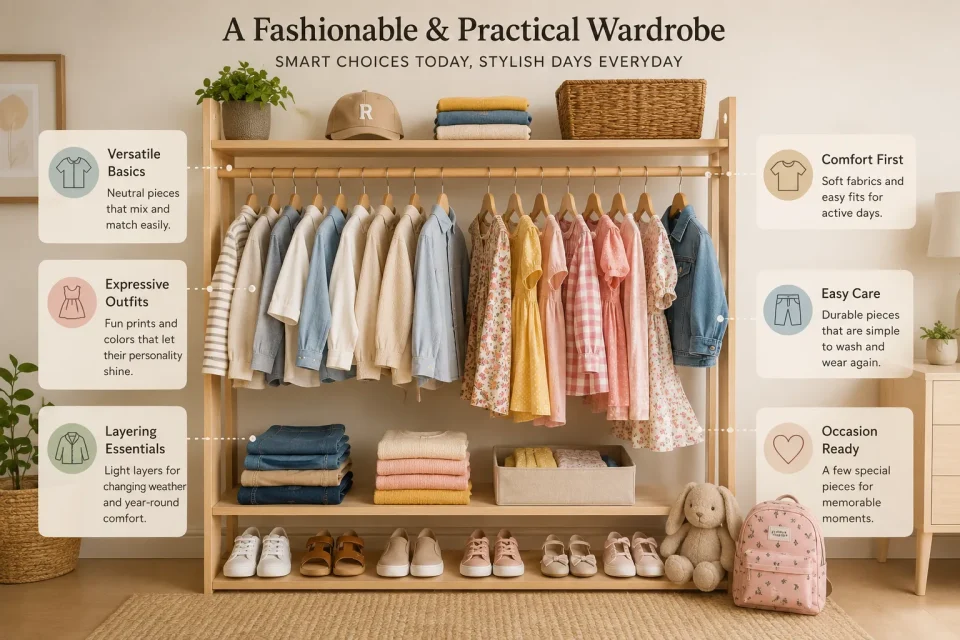
A child’s wardrobe needs to do many jobs. It must provide clothing for school, play, outings, family events, travel, changing weather and unexpected spills. At the same time, many parents want their children’s clothes to express personality and look thoughtfully chosen.
The solution is not necessarily a larger wardrobe. It is a more connected one.
By combining practical foundation pieces with a smaller number of distinctive outfits, families can create variety without buying clothing that is rarely used.
Begin With the Child’s Real Routine
Before shopping, think about how your child spends a normal week.
A child who attends school five days a week and plays outdoors every afternoon will need different clothing from a toddler who spends most days at home or a child who regularly attends family and cultural events.
Divide the wardrobe into realistic categories:
- School or daycare
- Home and active play
- Casual outings
- Parties and family gatherings
- Cultural or festive occasions
- Sleepwear
- Seasonal layers
Then estimate how many outfits are actually required between laundry days.
This prevents one common problem: owning many attractive special outfits but not enough practical everyday clothing.
Create a Dependable Foundation
Foundation pieces are easy-to-coordinate items that support the rest of the wardrobe.
They may include:
- Solid or subtly patterned T-shirts
- Comfortable pants or leggings
- Neutral shorts
- Simple skirts
- Lightweight sweaters
- A versatile cardigan
- A practical jacket
- Everyday shirts or dresses
Neutral does not have to mean colorless. Navy, denim blue, soft pink, beige, olive, cream and muted red can all function as flexible base colors.
The purpose is coordination. If most tops work with at least two bottoms, getting dressed becomes easier and fewer items remain unused.
Add Personality Through Statement Pieces
Once the foundation is covered, introduce clothing that makes the wardrobe feel special.
Statement pieces may include:
- A bright printed dress
- A detailed shirt
- A coordinated two-piece set
- A traditional-inspired outfit
- A ruffled or tiered silhouette
- A bold seasonal pattern
- A special mother-and-child combination
These pieces create visual variety and often become the clothing children remember most.
The key is balance. A wardrobe made entirely of statement pieces can be difficult to coordinate. A wardrobe made entirely of basics may feel repetitive. Combining the two gives parents practicality and children a sense of expression.
Use Coordinated Sets Strategically
Two-piece and three-piece sets can offer excellent wardrobe flexibility.
Worn together, the pieces create a complete, polished outfit. Worn separately, they may coordinate with simpler clothing already in the closet.
Before purchasing a set, consider whether:
- The top can be worn with jeans, leggings or a neutral pant
- The bottom can work with a simple shirt
- The additional layer or accessory can be used with another outfit
- The complete look suits more than one occasion
A well-selected set can produce several outfit combinations rather than only one.
Choose Fashion That Works for Children
Children’s fashion should still allow children to behave like children.
An outfit can follow current color, print and silhouette trends without copying adult fashion too literally. Age-appropriate fashion focuses on cheerful details, interesting shapes and creative styling while preserving comfort and movement.
Look for fashionable features that remain practical:
- Soft ruffles that do not restrict movement
- Prints that coordinate with existing items
- Relaxed dresses with comfortable arm openings
- Shirts with interesting collars or subtle detailing
- Adjustable or elastic waistbands
- Layering pieces that change the overall look
- Traditional influences adapted into wearable silhouettes
Fashion becomes more useful when it supports the child rather than demanding constant adjustment.
Plan Around Seasons
Seasonal planning helps families avoid unnecessary purchases.
For spring and summer, prioritize lightweight garments, breathable materials and pieces that can be worn without complicated layering.
For fall, use transitional items such as cardigans, overshirts, light jackets and longer bottoms. Summer dresses may continue to work with an added layer.
For winter, focus on warmth and layering. Instead of replacing the entire wardrobe, parents can add thermal layers, sweaters, coats and weather-appropriate accessories.
Consider local climate rather than relying only on national fashion seasons. A family in Florida will have different clothing needs from one living in Minnesota.
Leave Room for Growth—But Not Too Much
Some growth allowance is useful, especially in casual dresses, shirts, elastic-waist bottoms and outerwear. Excessively large clothing, however, may look untidy, restrict movement or remain unworn until the appropriate season has passed.
Look for features that extend wearability:
- Adjustable waistbands
- Rollable sleeves
- Relaxed silhouettes
- Stretch fabrics
- Tunic styles that can later be worn as tops
- Dresses with flexible waist placement
These design features can provide longer use without making the child appear overwhelmed by the garment.
Make Special Clothing More Versatile
Parents sometimes avoid special outfits because they expect limited use. Versatile styling can change that.
A polished dress can be worn with simple shoes and a cardigan for a family lunch, then styled with a decorative accessory for a celebration. A detailed shirt can work with casual pants one day and more formal trousers another.
Traditional and culturally influenced outfits can also become part of a broader wardrobe. A printed tunic may be paired with its coordinated bottom for an event, then worn later with leggings or jeans.
The more naturally a special piece integrates with everyday clothing, the stronger its value becomes.
Involve Children in Age-Appropriate Choices
Children are more likely to wear clothing they enjoy.
This does not mean giving them complete control over every purchase. Parents can narrow the options based on budget, quality and practicality, then let the child choose between two or three suitable designs.
Younger children may respond to colors, prints or details. Older children may have clearer preferences about fit and style.
Involving them can reduce unworn purchases and help children develop confidence in making thoughtful choices.
Review Before Buying More
Before each major season, remove items that no longer fit and group the remaining clothing by category.
Ask:
- What still fits?
- What is worn most often?
- Which items are difficult to coordinate?
- What is missing?
- Are there enough outfits between laundry days?
- Is there suitable clothing for upcoming events?
Create a short shopping list based on actual gaps. This is more effective than browsing without a plan.
Fashion and Practicality Can Work Together
A practical wardrobe does not need to look basic, and a fashionable wardrobe does not need to be expensive or difficult to maintain.
The strongest children’s wardrobes combine dependable everyday pieces with carefully selected designs that bring color, personality and cultural variety.
Bloom & Thread was created around this balance. We believe children’s clothing should look distinctive while remaining wearable, well made and sensibly priced.
By planning around real routines, coordinating pieces and choosing fashion with purpose, parents can create a wardrobe that feels varied without becoming excessive. The result is easier mornings, better value and clothing children genuinely enjoy wearing.