
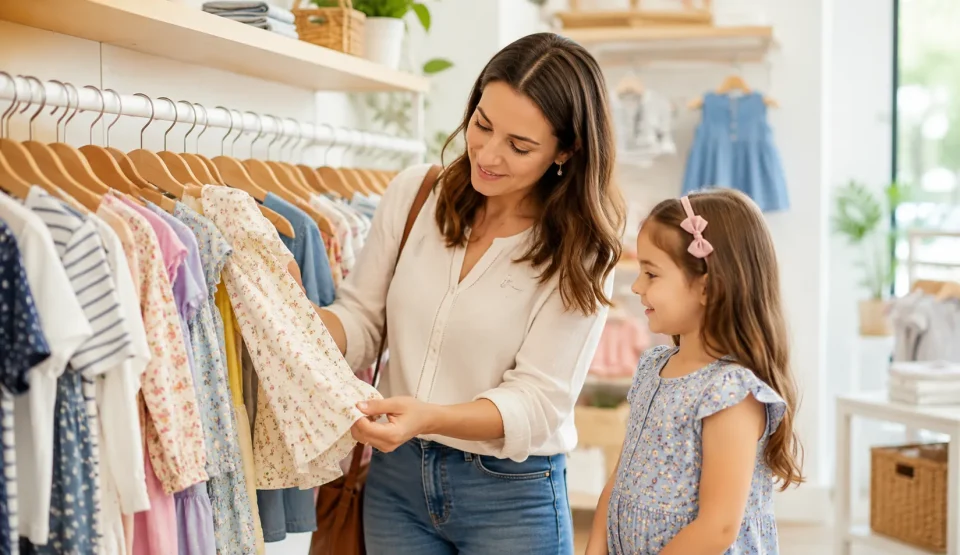
Children grow quickly, play actively and often need several outfit changes in a single day. That can make shopping for children’s clothing feel like a difficult balancing act. Parents want clothes that look good, feel comfortable and survive regular washing—but they also do not want to spend heavily on pieces their child may outgrow within a season.
The good news is that affordable clothing does not have to mean poorly made clothing. By learning what to examine before purchasing, parents can make more informed choices and get better value from every outfit.
Start With the Fabric, Not Just the Design
Color, print and style may attract your attention first, but the fabric will have a greater effect on how often your child can comfortably wear the garment.
For everyday clothing, look for fabric that feels soft but not unusually thin. A lightweight fabric can be ideal for warm weather, but it should still feel stable when held or gently stretched. If the material immediately loses its shape, appears transparent in areas where it should not or feels rough against the skin, it may not perform well after repeated washing.
Cotton and cotton-rich fabrics are popular for children because they generally feel soft and breathable. Blended fabrics can also be useful. For example, adding a small amount of polyester may help a garment resist wrinkles, dry faster or maintain its shape. The right choice depends on the purpose of the outfit.
Instead of assuming that one fiber is always better, ask practical questions:
- Will my child wear this in hot or cool weather?
- Is it intended for school, play, travel or a celebration?
- Will it need to be washed frequently?
- Does the fabric feel comfortable against the skin?
- Can my child move freely while wearing it?
A good garment should match the activity for which it is being purchased.
Examine the Stitching
Stitching is one of the clearest indicators of construction quality.
Turn the garment inside out when possible. Look at the side seams, armholes, neckline, waistband and hem. The stitches should generally appear straight, secure and evenly spaced. A few loose thread ends can be trimmed, but multiple unfinished threads or irregular seams may suggest that the garment was assembled too quickly.
Gently pull the fabric on both sides of a seam. The seam should remain closed without exposing large gaps between the stitches. Pay particular attention to areas that experience pressure, such as the underarms, shoulders, crotch and waistband.
For dresses with ruffles, decorative panels or layered hems, inspect where the additional fabric is attached. These features should be securely sewn rather than depending on only a narrow or fragile line of stitching.
Quality is not always visible from the front of a product photograph. That is why trustworthy online clothing stores should provide clear images, helpful descriptions and enough information for customers to understand the garment.
Check Buttons, Zippers and Decorative Details
Children’s clothing often includes buttons, tassels, bows, beads, zippers or other decorative elements. These details can make an outfit distinctive, but they should also be securely attached and appropriate for the child’s age.
Buttons should feel firm rather than loose. Zippers should move smoothly without repeatedly catching the surrounding fabric. Elastic waistbands should stretch comfortably and return to their original shape.
For younger children, parents should be especially cautious about small detachable decorations. Clothing safety involves more than softness and fit. The design should suit the child’s age and normal activities.
Certain children’s garments sold in the United States are subject to specific safety requirements. For example, the Consumer Product Safety Commission identifies some drawstrings in children’s upper outerwear as substantial hazards. Children’s sleepwear is also regulated under federal flammability standards.
This does not mean parents need to become compliance experts. It does mean that they should buy from businesses that treat children’s clothing as a responsibility rather than simply a fashion product.
Consider Fit and Movement
A garment can be well made and still be a poor purchase if the fit prevents a child from moving comfortably.
Children should be able to lift their arms, bend, sit, walk and play without the outfit pulling tightly at the shoulders, waist or legs. Clothing does not need to be extremely loose, but it should allow natural movement.
When shopping online, compare the child’s measurements with the product-specific size chart instead of relying only on age. Two children of the same age can have very different heights and body proportions.
Also consider the intended silhouette. A straight-cut kurta, a fitted party dress and a relaxed summer dress will naturally fit differently. Product measurements and descriptions help parents distinguish between a design that is intentionally relaxed and one that is simply too large.
Calculate Value by Wear, Not Only by Price
A lower price is not always a better deal.
Imagine one dress costs $18 but becomes misshapen after three wears. Another costs $29 and is worn fifteen times. The first dress costs $6 per wear, while the second costs less than $2 per wear.
This is known as cost per wear:
Purchase price ÷ Number of times worn = Cost per wear
Parents do not need to calculate this precisely for every purchase. The idea is simply to consider whether a garment can be used often, coordinated with existing items and cared for without difficulty.
A fashionable outfit with good construction can also have value beyond one child. It may be passed to a younger sibling, shared with a relative, donated or resold if it remains in good condition.
Read the Label and Care Instructions
In the United States, most textile products must carry information about fiber content, country of origin and the manufacturer or responsible business. Clothing manufacturers and importers must also provide appropriate care instructions.
The care label helps you understand whether the garment suits your routine. A beautiful everyday outfit may not be practical for your family if it requires complicated cleaning after every use.
Before purchasing, consider whether the item can be machine washed, whether it should be washed in cold water and whether it needs to be air-dried. Following the instructions can reduce fading, shrinking and damage.
Build a Wardrobe Around Useful Pieces
Better shopping is not necessarily about buying more. It is about choosing garments that work together.
A child’s wardrobe becomes more useful when several tops match the same bottoms, dresses can be worn with different layers and special pieces can be styled for more than one occasion.
Before buying something new, think about at least three realistic situations in which your child could wear it. A versatile dress might work for a family lunch, birthday party and vacation. A printed shirt may coordinate with shorts, jeans and dress pants.
This approach allows families to enjoy fashion while remaining thoughtful about spending.
Affordable Quality Is About Balance
There is no single perfect fabric, price or style for every child. Good-quality kids’ clothing balances several factors: comfortable material, reliable stitching, age-appropriate design, useful fit, manageable care and a price that makes sense for the family.
At Bloom & Thread, we believe parents should not have to choose between clothing that is fashionable and clothing that is practical. Our goal is to offer thoughtfully selected children’s styles that provide good value, dependable quality and designs children can enjoy wearing.
When parents know what to examine, they can shop with greater confidence—and build a wardrobe that looks good, feels good and works for real family life.